The Mystical Secrets of the Sacred Geometry Triangle and Circle

Introduction
Sacred geometry is a fascinating and ancient practice that explores the significance of geometric shapes and forms in the realm of spirituality, art, and architecture. This article delves deep into the profound meanings and symbolic representations of two fundamental shapes: the triangle and the circle, both of which hold immense importance in sacred geometry.
What is Sacred Geometry Triangle and Circle?
The Meaning and Symbolism
Sacred geometry ascribes symbolic and spiritual significance to geometric shapes, particularly the triangle and the circle. These shapes hold profound meanings in various cultures and belief systems, representing universal concepts and principles.
- Strength: The triangle symbolizes strength, resilience, and the ability to overcome challenges. Its structure and inherent stability denote inner strength and the capacity to endure difficulties.
- Harmony: In sacred geometry, the triangle signifies harmonious relationships, balance, and the integration of mind, body, and spirit. It represents the interconnectedness of all things in the universe.
- Stability: As a geometric shape the triangle embodies stability and firm foundations. It represents the unyielding support necessary for growth and progress.
- Unity: The circle embodies the concept of unity, oneness, and wholeness. It symbolizes the interconnected nature of all existence and the continuity of life and energy.
- Wholeness: In sacred symbolism, the circle represents completeness, totality, and the cyclical nature of existence. It signifies the infinite nature of the universe and the eternal cycle of birth, growth, death, and eternal cycle of birth, growth, death, and rebirth.
- Infinite Energy: The circle is a symbol of infinite energy and endless possibilities. It represents the boundless potential inherent in the universe and the ceaseless flow of cosmic energy.
Historical Significance
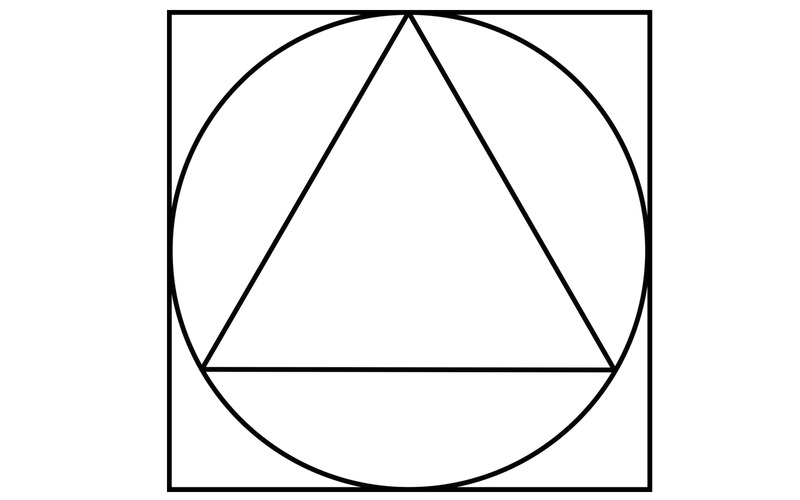
Throughout history, the triangle and circle have been revered for their symbolic importance. Ancient civilizations, such as the Egyptians and Greeks, incorporated these shapes into their art, architecture and religious rituals, attributing profound significance to their representations in various aspects of life.
The concept of sacred geometry, which encompasses the use of geometric shapes in religious and spiritual contexts, has been deeply intertwined with human history. The triangle, with its three sides representing unity, harmony, and balance, holds special significance in diverse cultures across different periods.
In ancient Egypt, the triangle was associated with the divine trinity and was often used in the construction of pyramids—a symbol of spiritual ascension and knowledge. Likewise, the circle, with its infinite and unbroken form, symbolized eternity and spirituality in various ancient traditions. The Mesopotamians considered the circle as a representation of the divine and incorporated it into their religious symbols and artifacts. The historical significance of these shapes transcends time and continues to intrigue scholars and enthusiasts who seek to understand the spiritual and cultural implications embedded within them.
Importance of Sacred Geometry in Modern World
Applications in Architecture and Design
In the modern world, sacred geometry holds a significant influence on architectural design and has been instrumental in the creation of awe-inspiring structures that resonate with spiritual and harmonic balance. Architects leverage the profound principles of sacred geometry to meticulously craft spaces that evoke a deep sense of tranquility, serenity, and spiritual connection. These applications in architecture encompass a wide range of elements, including:
- Integration of geometric proportions and patterns to design sacred spaces such as temples, mosques, and meditation halls, fostering an environment conducive to spiritual contemplation and inner peace.
- Utilization of fractal geometry and Fibonacci sequences to create visually captivating structures that reflect the inherent geometry found in nature, thereby establishing a harmonious relationship between the built environment and the natural world.
- Exploration of sacred geometry principles in interior design, where spatial arrangements and decor are meticulously crafted to enhance the experience of occupants, promoting mental clarity, focus, and emotional well-being.
Scientific Relevance
Sacred geometry is not only a subject of spiritual and artistic significance, but it also holds a profound impact on the scientific community. Its intricate patterns and dynamic forms have sparked the interest of scientists and researchers in various fields, leading to significant explorations and discoveries. Let’s delve deeper into the scientific relevance of sacred geometry:
- Mathematics: Sacred geometry provides a foundation for geometric and mathematical principles. It introduces concepts such as the Golden Ratio, Fibonacci sequence, and geometric progression, which have practical applications in various mathematical theories and calculations.
- Physics: The geometric patterns of sacred geometry have implications in the study of physics, particularly in the exploration of energy patterns, waveforms, and resonance phenomena. Researchers have found correlations between sacred geometric shapes and natural forces, enhancing our understanding of the physical world.
- Metaphysical Studies: Sacred geometry intertwines with metaphysical studies, offering insights into the interconnectedness of the universe, consciousness, and symbolism. It serves as a bridge between the tangible and intangible aspects of existence, stimulating philosophical and metaphysical inquiries.
Furthermore, sacred geometry acts as a unifying thread between different scientific disciplines, encouraging interdisciplinary research and collaboration. Its influence extends even to technological advancements, inspiring innovations in fields such as computer graphics, 3D modeling, and visual representation of complex data.
The Triangle in Sacred Geometry
Symbolism and Interpretations
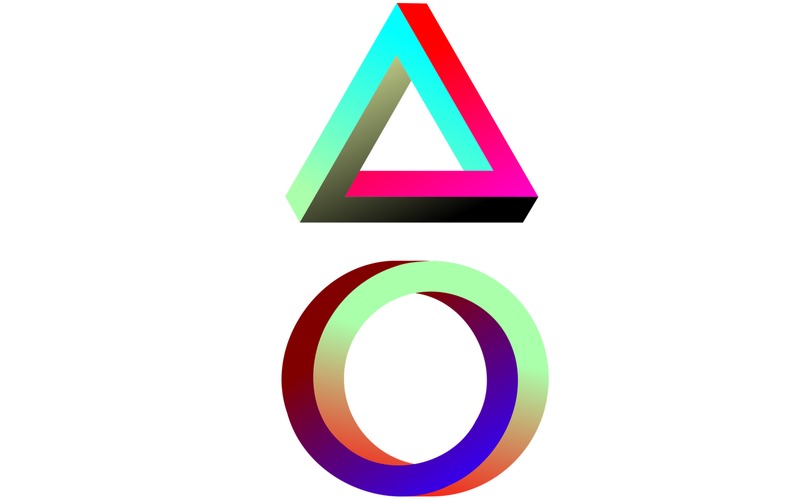
The triangle holds deep symbolic connotations in various spiritual and cultural contexts. It represents the divine trinity, embodying notions of creation, preservation, and destruction. Additionally, the triangle symbolizes the union of mind, body, and spirit, reflecting the interconnectedness of these fundamental aspects of existence.
The symbolic significance of the triangle extends across many ancient civilizations and belief systems, with each culture attributing its unique interpretations to this geometric shape. In Hinduism, the triangle, or ‘trikona’, is closely associated with the concept of Shiva, the god of destruction, who is often depicted with a triangular symbol on his forehead.
Similarly, in ancient Egyptian beliefs, the triangle was a representation of the divine triad forming the basis of all creation, including the union of Osiris, Isis, and Horus. This geometric shape also features prominently in the symbolism of alchemy, where it represents the three essential stages of transformation – nigredo, albedo, and rubedo, each corresponding to different phases of spiritual enlightenment and self-realization.
Role in Spiritual Practices
In spiritual practices and traditions, the triangle holds profound significance and plays a pivotal role in facilitating spiritual growth and connection. Its symbolism extends beyond mere geometry, encompassing profound spiritual themes such as balance, harmony, and unity with the divine.
- Symbol of Protection: The triangle is revered for its ability to create a protective energy field, warding off negative influences and providing a safe space for spiritual exploration and meditation.
- Gateway to Transcendence: Through the triangle’s interconnectedness with the spiritual realm, individuals can embark on a journey of transcendence, surpassing mundane limitations and reaching higher states of consciousness.
- Facilitator of Enlightenment: This sacred shape acts as a conduit for spiritual energy, promoting inner enlightenment, self-realization, and a deep understanding of the interconnectedness of all things.
The Circle in Sacred Geometry
Symbolic Meaning and Interpretations
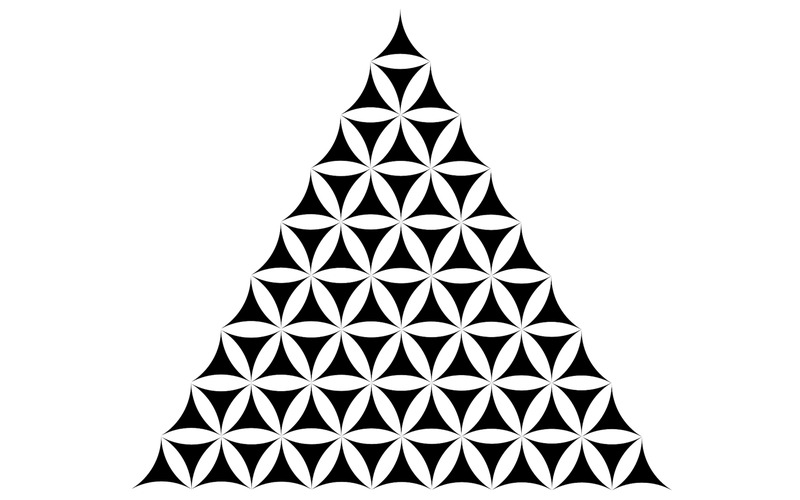
The circle holds profound symbolic meaning and interpretations across various cultures and belief systems. Its significance extends beyond mere geometric form, embodying deep philosophical and metaphysical concepts that resonate with the human experience.
- Eternity and Infinity: The circle is a timeless symbol of eternity and infinite cycles, representing the unending nature of existence and the eternal flow of energy.
- Wholeness and Unity: It symbolizes completeness, oneness, and the interconnectedness of all things, reflecting the holistic nature of the universe.
- Cyclical Nature: In sacred geometry, the circle embodies the cyclical rhythms of life, the seasons, and the cosmic patterns, emphasizing the interconnectedness and balance within the natural world.
- Harmonious Balance: As a symbol of perfect balance and harmony, the circle encapsulates the inherent order and equilibrium found in sacred geometry, offering a lens through which to perceive the harmonious design of the cosmos.
- Spiritual Symbolism: Across spiritual traditions, the circle is revered as a representation of divinity, unity with the divine, and the boundless essence of existence.
Integration with Sacred Practices
The circle is employed as a sacred space for ceremonies, meditation, and spiritual communion in sacred practices and rituals. It symbolizes a sanctified boundary and serves as a portal for accessing the divine, creating a space for transcendence, spiritual connection, and inner transformation.
- The circle is a universal symbol found in many sacred traditions. It represents wholeness, unity, and the cyclical nature of life.
- Within Wiccan and Pagan rituals, the circle is cast as a protective boundary, marking the sacred space for magical workings and spiritual connection with the elements.
- In indigenous traditions, the circle is used in healing ceremonies, dance rituals, and communal gatherings to honor interconnectedness and nature’s cyclical rhythms.
Furthermore, the use of the circle in sacred practices extends to various forms of meditation such as walking meditations in labyrinths, where the circular path represents a journey inward, reflection, and spiritual transformation.

Exploring the Relationship Between Triangle and Circle
Interconnectedness in Symbolism
In the realm of symbolism, the interplay between the triangle and circle holds profound significance, delving into the interconnectedness of opposing forces and complementary energies. The triangle, often representing stability and strength, intersects with the circle, symbolizing infinite cycles and fluidity, giving rise to a complex tapestry of meaning and representation.
This interconnectedness mirrors the delicate balance of the natural world, where opposing elements coexist in harmony, each influencing the other in a continuous dance of creation and transformation. The triangle and circle, when entwined in symbolism, evoke a sense of unity within diversity, weaving together the threads of duality and unity to form a rich tapestry of interconnected symbols.
Harmony and Balance
When considering the harmony and balance between the triangle and circle, it is essential to delve into the deep-rooted symbolism and profound significance that underpins this union. The interplay of these two elemental shapes transcends mere physical form and ventures into the realm of profound meaning and representation.
The triangle, with its three sides symbolizing stability, strength, and progression, converges with the circle, which embodies fluidity, infinity, and unity. This amalgamation gives rise to a symbolic language of harmonious equilibrium where stability and fluidity intersect, and precision resonates with organic flow.
Furthermore, the sacred geometry woven into the fabric of this union encapsulates a delicate balance between seemingly opposing forces. The precision of the triangle harmonizes with the organic flow of the circle, depicting a symbiotic relationship between seemingly disparate elements. It is within this harmonious interplay that the true essence of balance and equilibrium unfolds, inviting contemplation on the interconnectedness of these elemental forces in the intricate tapestry of life.
Practical Applications of Sacred Geometry in Daily Life
Influence on Art and Creativity
Sacred geometry, with its intricate mathematical and philosophical principles, has long been an influential force in the realm of artistic expression. Artists, whether visual, sculptural, or otherwise, have been deeply inspired by the harmonious and metaphysically significant nature of sacred geometry.
The interplay of geometric patterns, symmetrical designs, and spiritual symbolism has led creatives to delve into the depths of this ancient wisdom to infuse their work with profound meaning and aesthetic appeal.

Healing and Spiritual Growth
Sacred geometry holds a significant place in the realm of healing and spiritual growth, offering a profound connection between the physical and metaphysical realms. By delving into the intricate patterns and symbolism of sacred geometry, individuals can unlock the potential for inner healing, balance, and spiritual elevation. The utilization of sacred geometry in holistic healing modalities is rooted in the belief that geometric forms harmonize energies and facilitate the alignment of mind, body, and spirit. Through this alignment, practitioners can access a deeper level of spiritual transformation and well-being.
One of the central aspects of applying sacred geometry to healing and spiritual growth is the recognition of the inherent resonance and vibrational qualities present in geometric patterns. These patterns, when integrated into meditation, energy work, and spiritual practices, act as conduits for channeling higher frequencies and promoting a profound sense of inner harmony. The harmonizing influence of sacred geometry creates a sacred space within which individuals can explore their spiritual journey, transcend limitations, and elevate their consciousness.
Furthermore, the rich symbolism encapsulated within sacred geometric shapes plays a pivotal role in guiding inner contemplation and self-discovery. Each shape carries a unique set of meanings and can serve as a focal point for meditation and introspection. Whether it’s the universally recognized significance of the Flower of Life, the intricate symmetries of the Metatron’s Cube, or the grounding stability of the Seed of Life, these symbols provide a framework for individuals to dive deep into their inner realms and cultivate spiritual awareness.
Conclusion
In conclusion, the exploration of sacred geometry, particularly the significance of the triangle and circle, offers profound insights into the intricate interplay of spirituality, symbolism, and the harmonious equilibrium of life. The timeless meanings and applications of these geometric shapes in diverse facets of human existence underscore their enduring relevance and provide a rich tapestry for exploration in the modern world.


